
As part of the ongoing 2026 China Storyteller Partnerships program, an international delegation of journalists and digital media influencers visited Jiangkou County in Tongren City, Guizhou to explore the region’s thriving matcha industry that is an emerging global brand and gaining remarkable recognition worldwide.

The visit offered delegates a firsthand experience of Fanjing matcha, which has rapidly established itself as a leading product in international markets. According to local officials, Fanjing matcha currently ranks second globally in exports, with sales reaching approximately 2,500 metric tons in 2025. Beyond its commercial success, the industry plays a vital role in local development, empowering over 110,000 farmers and contributing significantly to rural revitalization in the region.
During the visit, the delegation was warmly welcomed and introduced to the complete process of matcha production, from cultivation to final packaging. Participants had the opportunity to observe modern processing techniques alongside traditional methods that preserve the authenticity and quality of the product. The combination of innovation and heritage impressed many delegates, who noted the careful attention given to both efficiency and cultural preservation.
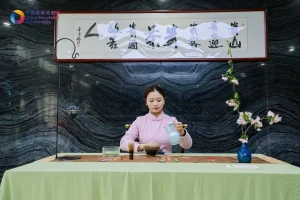
A highlight of the experience was the interactive session where delegates tasted a variety of matcha-based products. From traditional matcha tea to modern culinary adaptations, the rich flavor and smooth texture of Fanjing matcha left a strong impression. Many participants expressed admiration for the quality and versatility of the product, describing it as both refreshing and uniquely refined.
Adding to the experience, the delegation also participated in a hands-on activity, learning how to prepare matcha tea using traditional techniques. Guided by local experts, participants practiced whisking the finely ground tea powder, gaining insight into the cultural significance and artistry behind matcha preparation. This interactive engagement allowed visitors to connect more deeply with Guizhou’s tea heritage.
Delegates widely praised the matcha industry as a successful example of green development and sustainable agriculture. The integration of ecological farming practices with modern industry has not only enhanced productivity but also ensured environmental protection. Participants highlighted how the industry reflects China’s broader commitment to balancing economic growth with ecological preservation.
The visit also underscored the importance of the matcha industry in promoting Chinese tea culture globally. Through expanding exports and international recognition, Fanjing matcha is helping to share Guizhou’s rich cultural heritage with the world. Delegates noted that such initiatives play a key role in strengthening cultural exchange and building global appreciation for traditional Chinese products.

Many members of the delegation expressed genuine enthusiasm for matcha, with several describing themselves as “in love” with its taste and cultural significance. Their experiences in Jiangkou County are expected to inspire a range of international stories, further enhancing the global visibility of Guizhou’s tea industry.
The visit to Fanjing matcha production sites not only highlighted the region’s economic achievements but also demonstrated how local industries can drive inclusive development while preserving cultural identity. As the 2026 China Storyteller Partnerships program continues, such experiences are helping to connect global audiences with the rich traditions and innovative progress of Guizhou.

